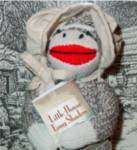
Friday, May 30, 2008

She did indeed know every word of it

The Independent 4th Reader.

"Do you know the Fourth Reader?" Teacher asked.
"Oh, yes, ma'am!" Laura said. She did indeed know every word of it.

Thursday, May 29, 2008

Got Liberty?

Poking around at the Mises Institute website I found pdfs of two Rose Wilder Lane books.

Give Me Liberty

and

The Discovery of Freedom.

Why not take a look, and then go purchase your own copy? A good addition to any library.

Tuesday, May 27, 2008

Hopps, Hopps and More Hopps


There is an interesting online newsletter about Skagit County, Washington. And there is quite the Little House connection, too. Skagit county neighbors Whatcom County, home of Mary Power Sanford.


Read more about it. Hopp to it!

Monday, May 26, 2008

Memorial Day


Thel Keane, the inspiration for 'Mommy' of the Family Circus died this weekend. Anyone who has or has had an elderly member of their family suffer from Alzheimer's or other dementia related disorders, will sympathize with the Keane family.
My condolences to the Keane family.

Photo is from The Family Circus Album A 25th Anniversary Celebration by Bil Keane.

Saturday, May 24, 2008

Memorial Weekend 2008


It isn't a complete visit from cyberbessie unless rosebunting drags her to a graveyard. And rosebunting has to drive in circles over unmarked roads that always seem to have forgotten railroad tracks that are real, working railroad tracks. And there is a rule that arrival concurs with the cemetery office being closed due to emergency, so each row has to be walked to pinpoint grave location.
Gravesites pictured are in Bellingham, Seattle and Sumner, Washington.
Surnames on graves visited include:Burd, Harthorn, Hopp, Johnson, Power and Sanford.

Sunday, May 18, 2008

Very...Dry...Reading

Little House, Long Shadow by Anita Clai Fellman.

Penny Linsenmeyer hit a home run in the book, she is mentioned in the main body of the work, in the chapter notes and in the bibliography about article she wrote:

Linsenmayer, Penny T. "Little Settlers on the Osage Diminished Reserve: A Study of Laura Ingalls Wilder's "Little House on the Prairie." Kansas History 24 (Autumn 2001): 168-185.

Sarah Sue Utoff is mentioned in the chapter notes.

Frontier Girl message board is mentioned in the chapter notes.

No mention of any of the listserves of days gone by.

The above is the interesting to me part of the book.

Most of the chapters had been published in the past in various periodicals. A part of me harbored a hope that the book was a work in progress, and the read would improve in the final state.

The print is real, grown up sized small typeface, there are no illustrations or photographs.

There must be a happy medium between the William Holtz hatchet job of LIW, and he didn't really do RWL any favors either, and the William T Anderson books written for the 6th grade level reader.

An unsung writer named Fred Erisman has done the best job thus far. He wrote a booklet for the Western Writers Series, Laura Ingalls Wilder. Another excellent read by him was:
Erisman, Fred. "Farmer Boy: The Forgotten Little House Book." Westen American Literature 28 (August 1993): 123-30.

The booklet and article are short, but they are both full of content.

My verdict on the Anita Clair Fellman book:

If your library purchased it, leaf through it first to see if you want to add it to your collection. As a bedtime book you won't have nightmares from reading it.

Ms. Fellman does not mention any email groups, I have given up on them. Groups seem to go "dead" on a 3-4 year cycle, and another group forms. I have been through 6 group changes since 1997, and I never get invited or hear about the new group until after all the interesting stuff goes down. Figuring that people's blogs will mention anything interesting happening is the route from now on.

And in advance, no thank you, nothing wrong with whatever email group might take offense, just don't seem to enjoy the format myself anymore.

thanks to cyberbessie for the bibliographic citations.

Friday, May 16, 2008

The Good Old Days--NOT!


My aunt was interviewed for the Neighborhood History Project in Portland, Oregon. The interviewer was Jim Poplack in 1976.
The photo is her official passport/emigrant image. The hoop, shoes and dress were all rented from the photographer. She didn't have a deluxe photo, you could rent jewelry for a bit extra.


My Aunt was Carmela "Mildred" Terrana Battaglia. (1905-1978) This is how the common immigrant family lived. A Sicilian dialect of Italian was spoken in the home until my father started school in 1920, he was born in the US and spoke more English than Italian. My grandfather decreed that only English would be spoken at home by the the children. My aunt would have been 15 at that time. Her grammar is not perfect, but she didn't need a translator to vote or shop.
"...it took years to pay back all he owed, buy meanwhile, he sent for my mother, so we came here in 1910.
There was no electricity, and the toilets were outdoors, no lights. We had to carry those globes from one room to another. The wood ranges--we'd warm up on one side, then turn around and warm up on the other side. On Mondays was the wash day which was the worst day of the week. Mother would put the copper boiler on the stove and boil the clothes and all that.
Recently I was talking to my granddaughters and they wanted to know my life history, and I says, 'Honey, I'll tell you: I put in fifteen or twenty pieces of wood, I had to do the washing. At 3:30 I'd come home and find there was overalls to was, there was black stockings to wash. Then in summertime I had to help can and I had to take care of all the different things.'
Another thing I used to have to do that I didn't like: they used to have tickings in their beds, they were split, and they had all this wool. I had the job in the summertime, of spreading it, fluffing it up. We had four beds with two double tickkings in it and I had to do that ever summer. I was sick and tired.
I says, "So now, youse girls have wonderful beds, you don't have to do nothin' you just press the button. You go to the refrigerator and you take out what you want. Ice cream's at your hand. We didn't have ice cream, we didn't know what ice cream was. We didn't have an ice-box; we didn't have a telephone. You girls are livin' in luxury, so don't crab at what you've got.
We lived at 21st and Powell between Brooklyn and Tibbets at what is now the People's Food Store.
We called it Terrana's Feed Store. I guess he stayed until the horses were gone, and the chickens and all that. Everybody, in those days had chickens, horses, rabbits, cows, and some had goats. He sold flour, oats, and hay. People came and got it in their horse and wagon or he delivered. His territory went up to 52nd.
Father bought most of his stuff from Albers Feed Store. I worked in the store to sell chicken food, but my mother did most of the big stuff. Have you ever been in there? Well, in the back there is a kitchenette. In one sections clear to your left, they had hay clear to the ceiling. He had flour another section and one place they had scales where they weighed the hay and the flour, and then, on this other side, they had shelves, where they had display. That's our old home We used to live upstairs.
If they wanted little items like a five pound sack of cracked wheat, I could weight that out fore them. Anything bigger, I had to get my parents.
(interviewer asks how clothes were washed)
Oh yes. You had a great big tub of zinc, you put it on two chairs and filled it with hot water. The water was warmed on the wood range and then we had this old scrub board. And we washed the sheets, then put them on this old copperboiler on the stove. They whipped up the sheets in there to boil them, get the stains out, sterilize them. Meanwhile, while those were boiling, you was washing another batch which was towels. You didn't throw the firset batch of water away because that was clean yet: the water was precious. When you got through with that water, you threw that out. Meanwhile those clothes that had boiled, youused that water to wash your shirts, and your coveralls. Course, that was a long process, with seven in the family, three or four beds, and sheets, so that took quite a while. As I said, at 3:30 , my mother saved the overalls, the dirty black stockings for me so I could learn to wash.
In those days, every child had a job.
Breakfast:...Mother set before us, nine slices of bread warmed on the wood range, and there was always lots of peaches which we canned, and we had rolled oats for breakfast every morning.
Next, I had to make the beds, I had to wash the dishes, and then I had to sweep the floor; then it was 8:30 and I had to go to school. The boys had to have the wood cut and into the kitchen so my mother wouldn't have to go out and carry the wood. That's why I say the children of today are living in the lap of luxury and don't realize it. What the children have today, I wish I had it then. But, I cannot live in the past. I cannot let my children and my grandchildren live in the past, because that is gone; life had to go ahead.
As my father told me, he says: 'I am training you for yourself and your children, so someday they know better than what I do today. You see, I come from poor parents, so I want to give you better advantages than what I had.' ( he went to school until age 10)
And he did. As I say, we all had a grammar school education and high school. (all graduated from high school with the exception of rosebunting's father, who dropped out one semester before graduation due to the Depression. )
We did get that though we was never rich.
We had plenty to eat, we had plain food, we didn't have no dessert, no cakes, no pies, but we had bread, homemade bread; fifteen, sixteen loaves of bread was baked every week, and that's what we ate. Long rolls of bread, then sometimes we'd come home for lunch and didn't have nothing else to eat, so she'd split one of those hot loaves down the middle, take it out of the oven, butter it, put grated cheese on it, and oh! It was delicious. Two loaves of bread would go in just two minuts. It stuck to your stomach. You didn't pinch it or squeeze it like you do today. Today you squeeze a loaf of bread and there's nothing there.
(what did you do on Sundays)
In the house, around the stove, tell stories about the Bible, our religion. We weren't rich, like I said, but there was no fights. There was no squacking--there was not such thing. We were all nice, quiet, because we didn't have anything to fight over. We shared everything what we had. Also, we'd go to Sunday school every Sunday. Then in the afternoon we'd visit friends. We had no babysitters like we have today. Where we went we had to be nice. We sat around the terrace and were quiet. Because your parents wanted people to say, "Come back again and bring your family." I have known people to bring their children and tear the house apart. Etiquette--the most precious thing we got...
(what hours did your father work?)
I would say 17 hours a day, get up at 4:00 in the morning -7:00pm. He delivered orders, food and stuff and some times he had to go and get his hay and flour. Then he had to take care of the store. And then he had his horse and his rabbits and things and then he went to bed.
toothcare:
First we brushed with salt on the brush and that is a very good deal for your teeth and cleans your teeth just like Pepsodent. Good old salt goes a long ways.
(why did your father settle in the 21st Street area?)
Because that's where they took him when he got off the train, all his friends lived here. He could speak and be understood.

Thursday, May 15, 2008

The Unmentionable Topic

Every now and then the topic of hygiene and how it was handled in the days of pops up.

First off--Laura Ingalls Wilder never, ever mentioned toilets, periods or underarm odor. The sole exception that I have found is in a letter dated January 25, 1938 from LIW to her daughter, RWL. The girls were never allowed near where the men were working at Silver Lake camp because the men would 'do their jobs' publicly. The grass was short, and all could be seen, according to Manly.

Dress shields were part of getting dressed. If you were wearing a garment made of material that would be ruined by perspiration, the little padded cloth half moons soaked up moisture.

Odor-o-no, or some such brand may have been the first deodorant. My father called it by that name. He was born in 1913, and in the time and place of his upbringing believed that real men did not perfume their armpits. He was the 5th child in his family, Saturday night was bath night. The girls were bathed first. The boys next, in age order. The same bath water. He was last. As an adult he would never take a bath, only showers for that reason.

There was plenty of water in Portland, Oregon. Why the one washtub for all the children?
Fuel. It takes a lot of wood to heat a tubful of water. Most likely there was only one tub heated for the Wilder and the Ingalls family, but modern readers would have thought they were not clean people.

Monday, May 12, 2008

Photo of the Day


Photo by cyberbessie
What Iris, the recess monkey is reading. My Iris is leaning over the edge of my cat basket now LIW doohickey holder. The cat thought the cat basket made a neat object to avoid at all times, so now it has a new use.

Sunday, May 11, 2008

My Saturday

This is what I did yesterday!

The School Board's Visit

...She had been so angry that it was hard to remember exactly what she had said. "I said that you have as much to say about the school as anybody. Then I said, 'It's too bad your father doesn't own a place in town.Maybe if you weren't just country folks, your father could be on the school board.'"

"Oh, Laura, " Ma said sorrowfully. "That made her angry."

"I wanted to," said Laura. "I meant to make her mad. When we lived on Plum Creek she was always making fun of Mary andme because we were country girls. She can find out what it feels like, herself."

"Laura, Laura," Ma protested in distress. "How can you be so unforgiving? That was years ago."...

Pa said..."So Nellie twisted what you said and told it to Miss Wilder, and that's made all this trouble. I see...Well, Laura, maybe you have learned a lesson that is worth while. Just remember this, 'A dog that will fetch a bone, will carry a bone.'"

Littl e Town On The Prairie, by Laura Ingalls Wilder. 1941 Harper and Bros.

Saturday, May 10, 2008

Little House, Long Shadow

Little House, Long Shadow is a new book by Anita Clair Fellman. The mail carrier brought it to me as I was sitting in my front yard, holding a fundraising yard sale for a local woman. The blank looks as I opened it, oooed, and said what the title was. I don't even really know what it is about. And I am as tired as Ma after the New England Supper. If I read anything tonight it will be the Mary Engelbreit's Home Companion that also came in the mail.

Night, night everyone!